0 (0 Reviews & Ratings)
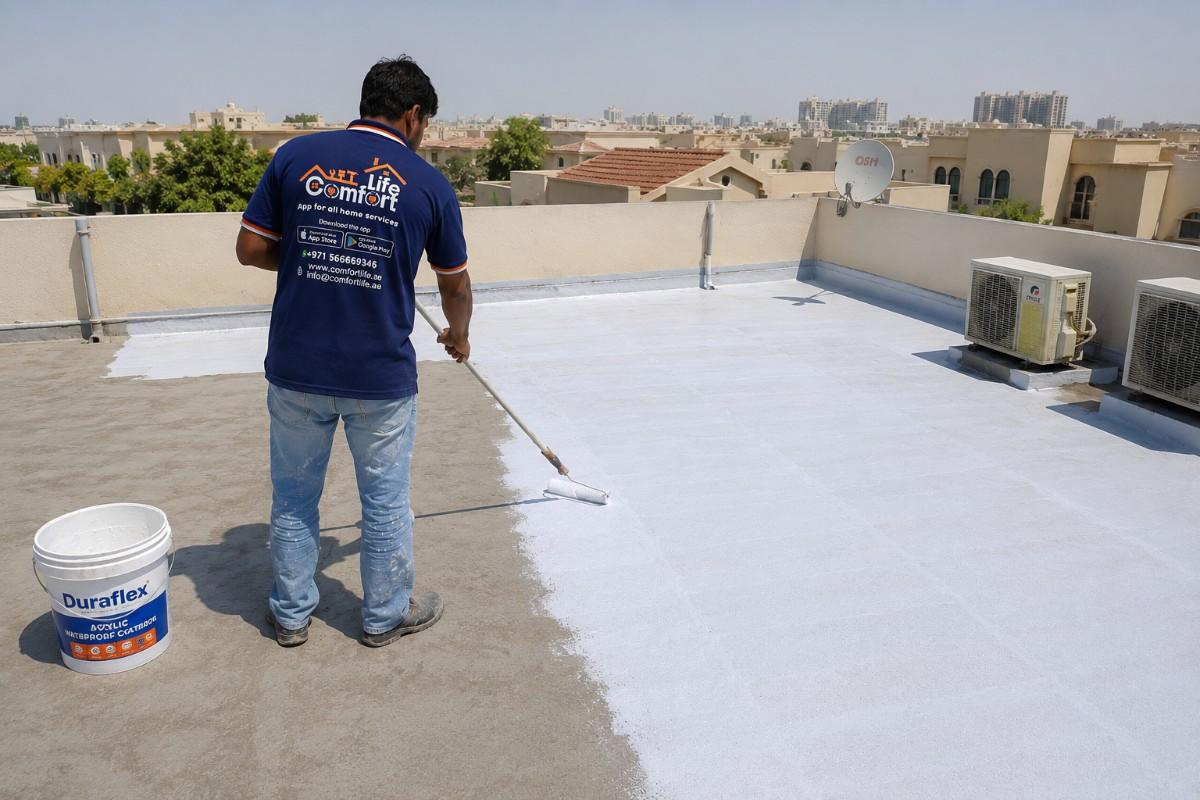
Looking for professional roof waterproofing services in Dubai? Comfort Life provides complete roof waterproofing solutions for villas, apartments, warehouses, commercial buildings, and residential properties across Dubai. Whether you are experiencing roof leakage, water seepage, roof cracks, or want preventive waterproof protection, our trained team delivers long-lasting and reliable solutions.
Our waterproofing specialists use premium materials and proven application methods to protect roofs from harsh weather conditions and future damage. We ensure proper surface preparation, crack treatment, and complete waterproof membrane application for maximum durability. We also assist with maintenance services, roof coating solutions, and complete property maintenance support.
We provide complete waterproofing solutions for residential and commercial properties including:
Our experts inspect your roof condition carefully and recommend the most suitable waterproofing method according to roof structure, damage level, and long-term performance requirements.
Comfort Life follows a professional step-by-step waterproofing process to ensure quality workmanship and lasting protection.
1. Roof Inspection
Our specialists inspect the roof surface, cracks, leakage points, damaged areas, and moisture-related issues.
2. Surface Preparation
We clean the surface thoroughly and prepare affected areas before waterproofing application.
3. Crack Treatment & Reinforcement
Critical areas are reinforced with primer treatment and polyester mesh where required.
4. Waterproofing Application
After approval, we apply the selected waterproofing system using professional techniques and high-quality materials.
We provide transparent pricing with high-quality materials and professional application.
Final pricing may vary depending on roof condition, repair requirements, and project size.
We focus on solving the root cause of leakage and seepage issues instead of temporary surface fixes.
We provide roof waterproofing services across Dubai including Dubai Marina, JLT, Business Bay, Downtown Dubai, Palm Jumeirah, JVC, Al Barsha, Arabian Ranches, Dubai Hills, Mirdif, Al Qusais, Silicon Oasis, and surrounding communities.
People often assume a roof leak means the roof has been damaged by rain, but here the rain is usually only the moment the problem becomes visible. The damage that lets water in has been building for years, and it is caused by heat rather than water.
A flat roof surface in Dubai can reach extreme temperatures in the afternoon and then cool sharply overnight. That daily expansion and contraction works on the membrane and on every joint in it, and over time it opens hairline cracks, lifts edges and pulls seams apart. Ultraviolet light does the rest, breaking down the surface of an unprotected coating until it goes chalky and brittle.
Add windblown sand abrading the surface, salt-laden air near the coast, and foot traffic from anyone servicing the AC units or a satellite dish, and a membrane that was sound at handover can be well past its useful life without anything obvious having happened to it. Then a heavy rain arrives, water sits on the roof for a few hours instead of draining, and it finds every one of those openings at once.
The clearest signs are inside: a damp patch or brown staining on a top-floor ceiling, paint bubbling or flaking on an upper wall, a musty smell in a room directly under the roof, or efflorescence, the white powdery deposit that appears where water has moved through concrete and left salts behind.
On the roof itself, look for cracking or crazing across the coating, patches that have gone chalky and leave a residue on your hand, blisters or bubbles under the membrane, membrane edges lifting away at parapets and upstands, and standing water still present a day or more after rain or after a wash down.
An important point about roof leaks is that the wet patch inside is very often not below the failure. Water travels along the underside of a slab and down through the path of least resistance, so it can appear several metres from where it entered. That is why tracing the source properly matters more than patching the nearest visible crack.
There is no single best system, only the right system for a particular roof and budget. Acrylic coatings are water-based, applied as a liquid, and reflect a good deal of solar heat, which both protects the roof and reduces heat gain into the rooms below. They are the economical choice and suit a sound roof that needs protecting and refreshing rather than rescuing. They are less suited to areas that hold standing water.
Polyurethane systems are liquid applied and cure into a seamless, flexible membrane. Flexibility is the important word: a polyurethane membrane moves with the thermal cycling that destroys more rigid coatings, and having no seams means no joints to fail. It handles detailing around upstands, drains and pipe penetrations better than a sheet system, and it is the choice for roofs that need to last.
Bituminous systems, usually torch-applied membrane sheets, are the traditional heavy-duty option. They are robust and proven, and they suit larger roof areas and situations where the membrane will be covered by screed, tiles or paving. The critical part with a sheet system is the overlaps and the terminations, because that is where a bituminous roof fails.
Which one is right depends on the condition of the existing surface, whether the roof is trafficked, how it drains, and what is currently on it. We will tell you which system suits your roof and why, including where the cheaper option is genuinely adequate.
Waterproofing applied over a roof that has not been properly assessed is money spent on a gamble. The inspection establishes what is already there, because a new coating has to be compatible with the existing surface, and applying the wrong system over an incompatible one is a common cause of early failure.
Our inspection covers the condition of the existing membrane or coating, the state of the parapets, upstands and any junction where the horizontal surface meets a vertical one, the drainage outlets and whether the falls actually take water to them, the sealing around pipe penetrations, AC supports and cable entries, and any evidence of trapped moisture under the existing layer, which must come out before anything is sealed over it.
You get a clear picture of what is failing, whether the roof needs a full system or targeted repair, and what preparation is needed. If a localised repair will genuinely solve your problem, we will say so rather than quoting a full roof.
Most water ingress does not come through the middle of a roof. It comes in at the edges and the details, and balconies and terraces are where those details are most concentrated.
The junction where the floor meets the parapet wall needs the membrane carried up the vertical face and properly terminated, not simply stopped at floor level. Door thresholds onto a terrace are a classic weak point, particularly where the outside floor level is close to the inside level. Drainage outlets need the membrane dressed into them so water enters the pipe rather than running under the membrane. Planters built directly onto a terrace are one of the most reliable causes of leaks we see, because they hold moisture permanently against a surface that was never designed for it.
Tiled balconies add another layer, since water passes through tile grout as a matter of course. The waterproofing has to be under the tiles and working, and grout is not a substitute for it.
A flat roof is never truly flat. It should be laid with a slight fall towards the outlets so that water leaves rather than sits. Where the falls are inadequate or a screed has settled, water ponds, and ponding is what turns a small membrane weakness into a leak, because standing water finds its way through given enough time.
Blocked outlets have the same effect and are far more common. Sand, leaves, bird nesting material and general debris block a roof drain quietly, and the first anyone knows about it is water where it should not be. Clearing the outlets is worth doing once or twice a year and takes minutes.
Where the falls themselves are the problem, no coating will solve it on its own. In those cases the answer involves correcting the levels or adding drainage, and we will tell you that rather than coating over a roof that will pond again next time it rains.
The best time to deal with waterproofing is before the rain, not after it. Liquid systems need dry conditions and a clean, dry substrate to cure properly, and the cooler months give better working conditions than the peak of summer, when surface temperatures can be too high for correct application in the middle of the day.
If you have seen any of the warning signs inside the property, do not wait for the next rain to confirm them. Once water has reached the slab and the internal finishes, you are paying for ceiling repair, repainting and possibly electrical work on top of the waterproofing itself, and a problem that would have been a straightforward job becomes several.
A properly installed system should give you many years of service, and a few simple habits extend it further. Keep the roof drains and outlets clear, particularly before the cooler months. Avoid dragging equipment across a coated surface, and put boards down when AC servicing or satellite work is being done, since a dropped tool or a dragged ladder foot is a real cause of damage.
Do not build planters, decking or storage directly onto a waterproofed surface without discussing it first, and inspect the roof once a year, looking particularly at the parapet junctions and around every penetration. If you spot a lifted edge or a crack early, it is a small repair. Left alone through a rain event, it is not.
Quick answers to common service questions in Dubai.


We work across the whole of Dubai. Choose your area to see what we do there and book a slot.


Choose Location